
Children learn best through everyday moments with caring adults. When children have trouble sharing their needs or feelings, it can lead to frustration for everyone. This resource helps caregivers respond in calm, supportive ways that build connection and understanding. Using the H-U-G-S approach, the Responsive Caregiver Strategies Manual offers simple steps and practical tools to help caregivers stay calm, notice their child’s cues, guide positive communication, and support emotional growth during both challenging and calm interactions.
Appendices
The resources below include easy-to-read infographics that share helpful tips for supporting your child’s social-emotional learning. Caregivers can use these tools to better understand the H-U-G-S approach and find simple ideas to use during everyday moments with their child.
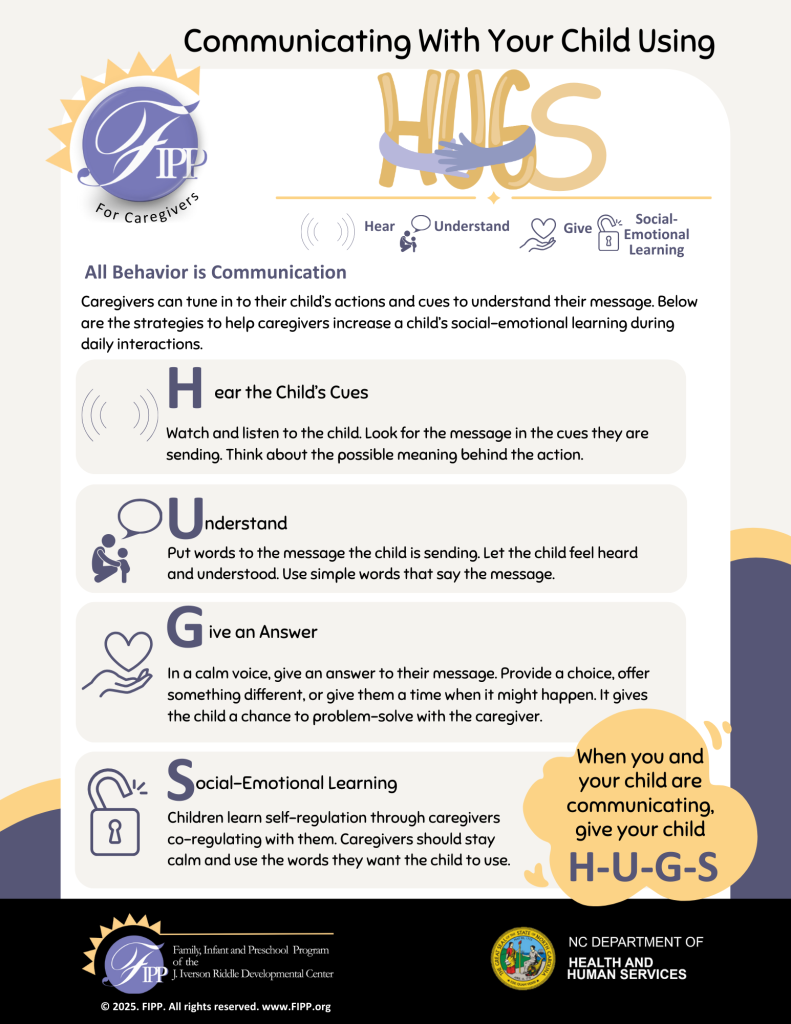
All behavior is a form of communication. This infographic introduces how H-U-G-S helps caregivers respond in ways that build learning and connection. Communicating With Your Child Using H-U-G-S (Spanish)
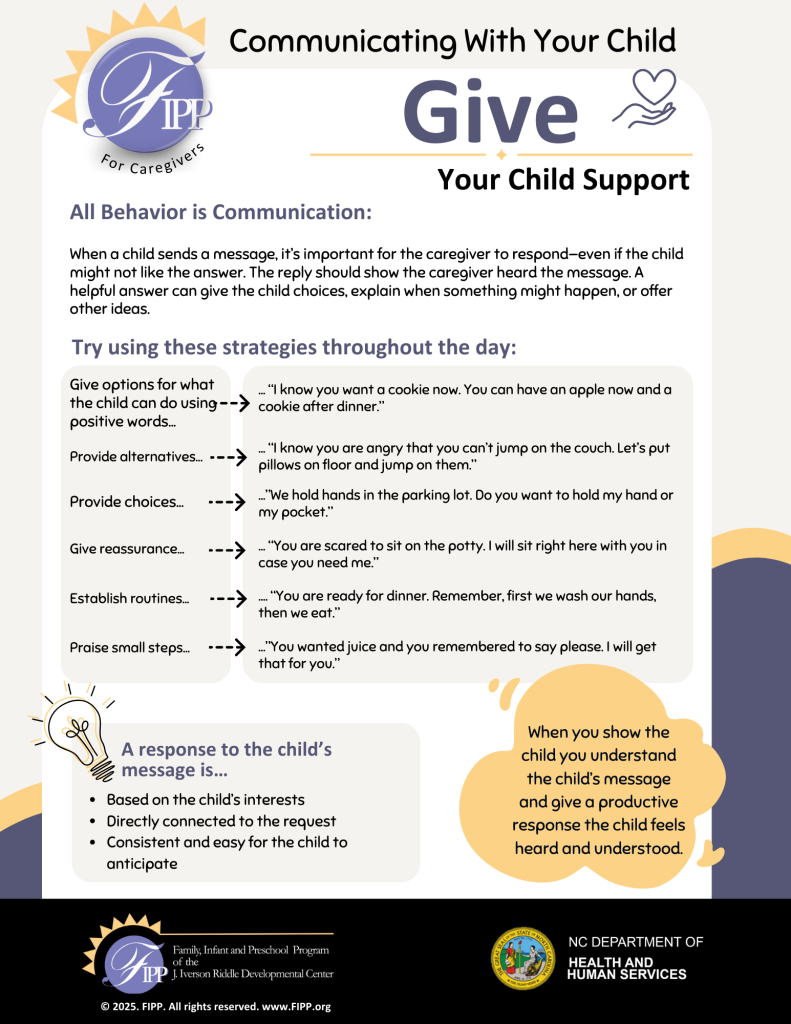
Every message deserves a response. Learn how to offer support, choices, and guidance while showing your child they were heard. Give Your Child Support (Spanish)
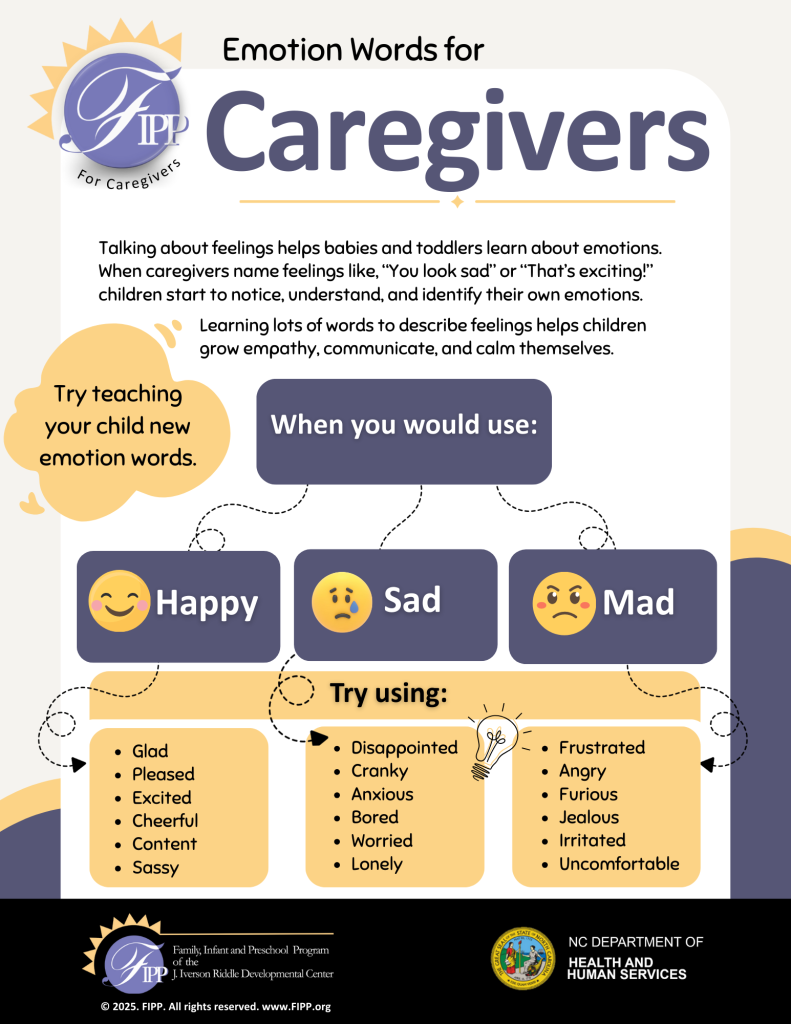
Talking about feelings helps children understand their emotions. This infographic shows lots of words caregivers can use to help children develop strong vocabulary. Emotion Words for Caregivers (Spanish)
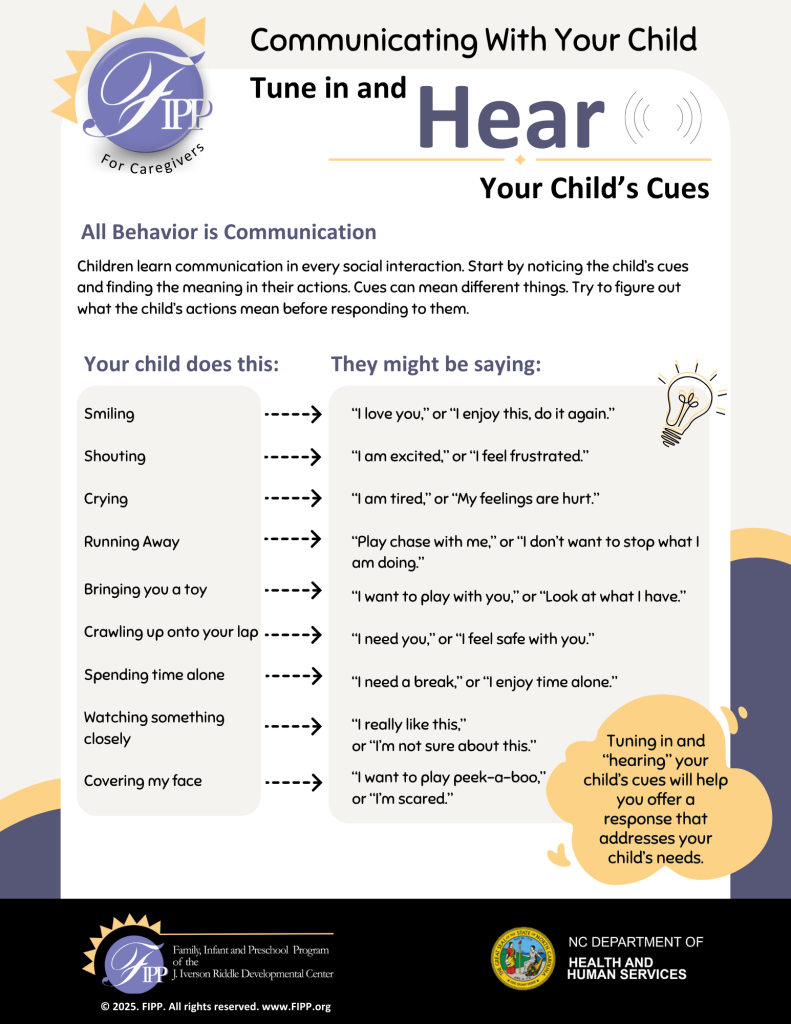
Children send messages through actions, sounds, and expressions. This resource helps caregivers notice and understand those cues. Tune in and Hear Your Child’s Cues (Spanish)
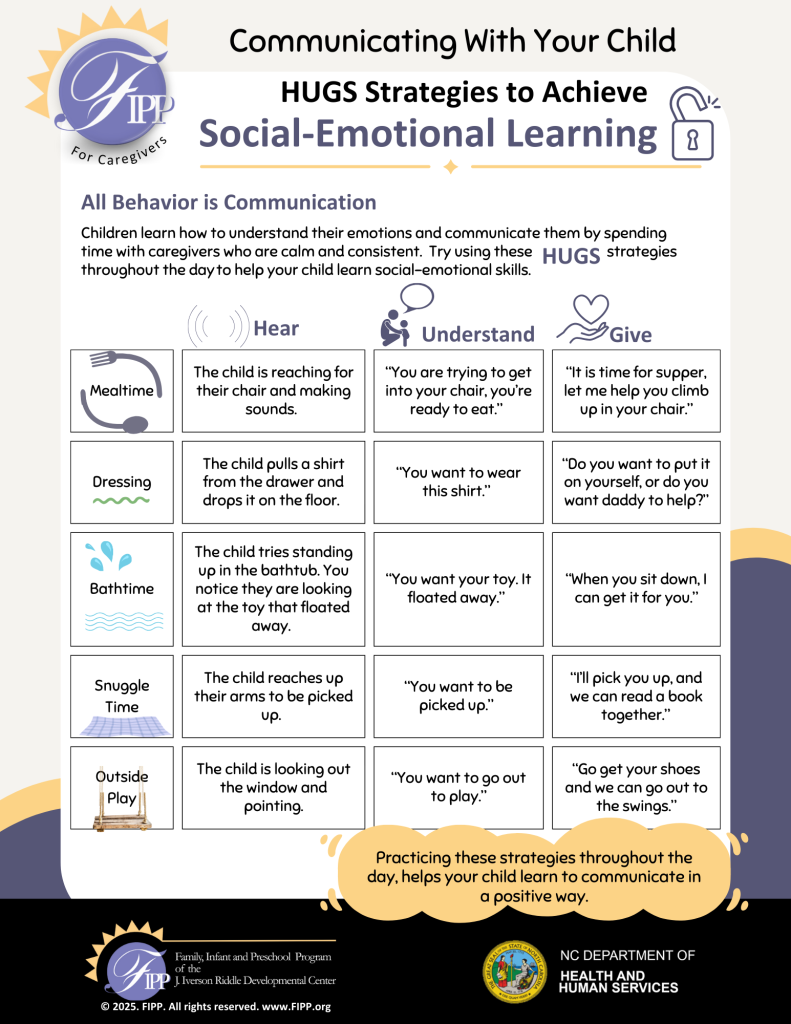
Daily interactions matter. This infographic brings all the H-U-G-S strategies together to support emotional growth and communication throughout the day. H-U-G-S Strategies to Achieve Social-Emotional Learning (Spanish)
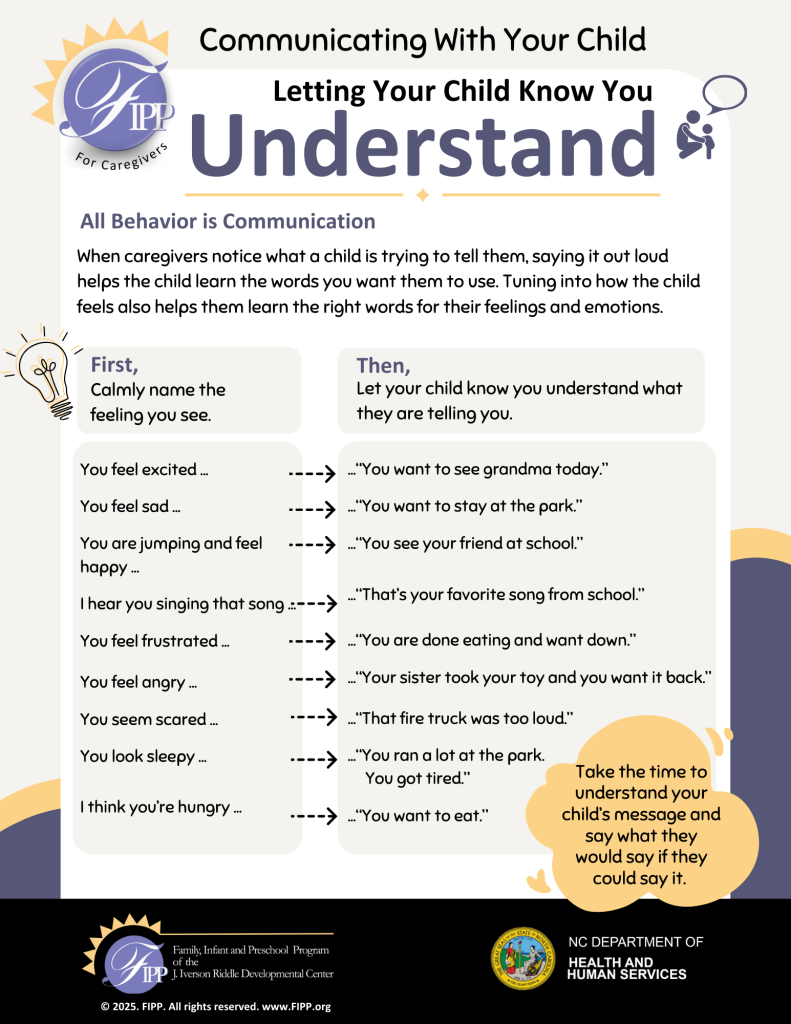
Saying what you see and hear helps children learn words for their thoughts and feelings. This infographic shows how to reflect understanding. Letting Your Child Know You Understand (Spanish)
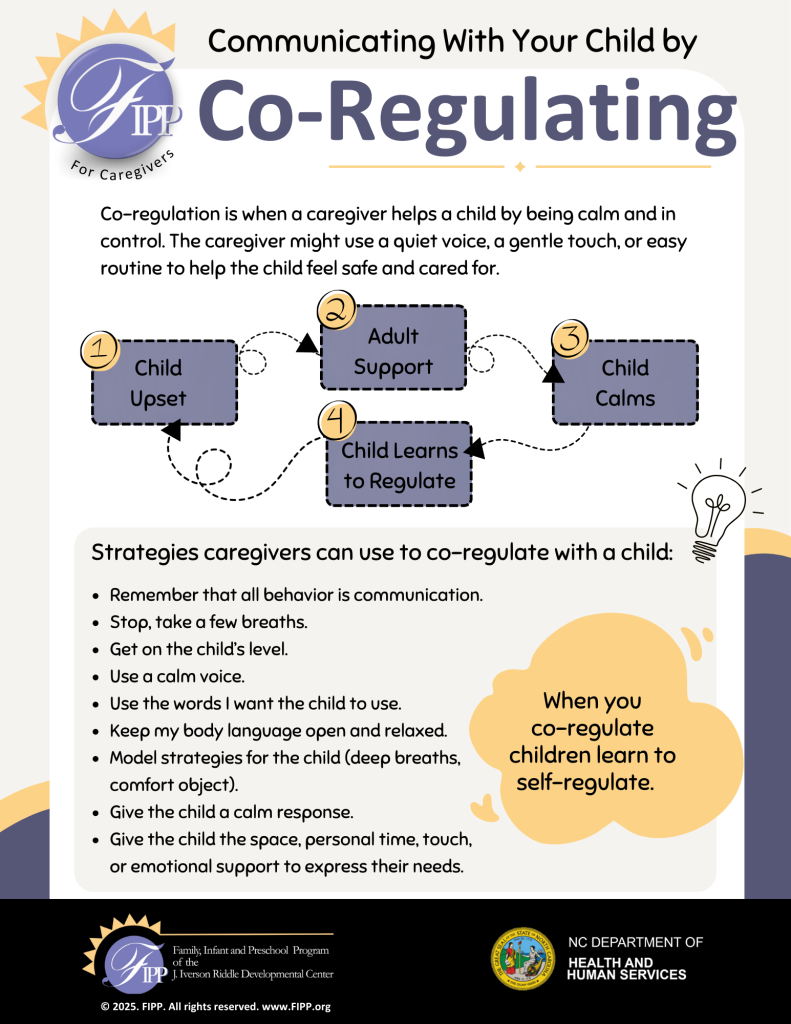
Children feel safer when caregivers stay calm. Learn how your voice, touch, and routines can help your child settle and feel supported. Communicating with Your Child by Co-Regulating (Spanish)
Together, these resources offer caregivers simple ways to use H-U-G-S throughout the day. Small, calm moments of connection help children feel understood, supported, and ready to learn while building strong social-emotional skills.